Wu Ji Quan is one of the oldest traditions of internal martial arts and originally comes from the folk tradition of China. Wu Ji Quan as a martial and healing art with its deep connection into as has prehistoric roots dating back more than 3000 years, is neither Daoist nor Buddhist in origin, but was adopted into the monastic Shaolin tradition by Bodhidharma, the famous first patriarch of Chan Buddhism and one of
the most important representatives of the Shaolin tradition, due to the unique positive properties of these forms of exercise on body and mind, and cultivated there for the cultivation of inner essence, meditation, healing and martial arts.
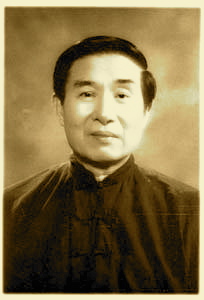
Wu Ji Quan was passed on by Grandmaster Chee Kim Thong, who in urn received these teachings from the former abbot “Yit Chan Chan Tse” of the southern Shaolin temple Poh Tor in Fujian province. While 18 forms were transmitted until his death in 2001, the remaining forms were written down by Grand Master Chee in calligraphy. From senior disciples of the early periods of Master Chee’s teaching as well our senior teacher Ray Woon it was was pointed out that the second part as well the additional 18 of 36 forms are featuring Wu Ji applications and drills as well what human beings are actually doing for living , craftsmanship and for survival in nature. If they can be deciphered further in a systemized structure remains to be seen.
Wu Ji is a very influential term in ancient Chinese philosophy especially according to the book of changes, the -Yi Ching- . In this context, the term Wu Ji refers to something akin to primordial emptiness or ultimate potential. It describes an unborn, undivided, timeless state—a state that, in a spiritual sense, contains all possibilities of spontaneous creation before anything is formed or manifested. This formless state gives rise to -The One- Tai Ji), and once -The One- here called the fundamental force of -Yin- exists, its polar opposite,– Yang- the ascending force), emerges. From – Wu Ji– the unborn Tai Ji, the world of form and the universe in its myriad manifestations come into being called – The Big Dao -.
Wu Ji as an internal martial art is rooted in the most natural foundation of spirituality, bridging mind, body, consciousness, and energy. It embodies the harmony between heaven, earth, and humanity, along with their healing power. This practice was already cultivated by people in ancient times, as Master Chee Kim Thong told us—a time when humans lived more or less naked, enduring the harshness of nature and the elements, maintaining their health amid cold and heat, and defending themselves against wild animals or bandits. The movement forms of Wu Ji Quan originate from the most primordial ways of life, shaped by shamanistic customs and rituals. The internal principles of preserving, nurturing, and storing life force (Chi) the foundation of countless exercises that especially stimulate all organs utilizing the fasciae, tendons, ligaments, and skeleton structures as pathways / meridians are also the basis of what is >nowadays known as Qi Gong. For this reason, the principles of Wu Ji Quan are often referred to as the “mother of all internal martial arts.” During the time of Hua Tuo, +208 A.D. the renowned physician and healer from the eastern -HanDynasty- , the principles of Wu Ji Quan were still well known and transmitted through various healing practices and martial arts. Even the more widely recognized Tai Ji Quan in the West, with its many family-style forms, evolved from this tradition.
Master Chee reported that every abbot and master of the Shaolin lineage , received Bodhidharma’s unique teachings, including the forms of Wu Ji Quan and other martial and healing arts of the lineage. >Wu Ji Quan had been a core teaching kept under monastic protection. Each master sealed the knowledge and wisdom of the Buddhist >teachings and martial arts being transferred in the lineage with their own individual teaching style and signature. Grandmaster Chee Kim Thong was likely the last Shaolin grandmaster of our era. Due to his extraordinary abilities and talent, he systematized the internal movements of – Wu Ji Quan – previously known mainly as foundational principles, especially in the first three forms of Yin, Yang, and Wind with their variations—into a teachable sequence of 18 forms. His goal was to preserve these precious >teachings for future generations. He was the first master to teach these principles to Western students in the 1970s up to his passing in 2001, knowing that Wu Ji Quan would otherwise vanish. Indeed, it appears that this art is no longer taught or practiced anywhere in China today. While the influence of the Buddhist Shaolin lineage and other spiritual traditions is part of the heritage, Grandmaster Chee has repeatedly emphasized that people of all faiths—including those without any specific spiritual background—can practice the teachings he passes on and the art of Wu Ji Quan. Guided by this open-minded belief, he has taught and shared his knowledge with everyone who wished to learn from him.
The first two forms of movement Yin and Yang form the foundation for the following higher forms -Wind , Clouds . Rain, clearing Sky and Sun . As is easy to recognize, these first 7 forms describe characteristics of nature and its transformations. Starting from the infinite potential, the Wu Ji, Yin develops as a more complementary force to Yang whose dynamics and energy finally rise to wind and thus evolution continues its course. In further forms, nature continues to describe itself as the sun and moon, the lake, the reflection, the stream, the current, the rapids, the river and finally the ocean. The movement forms of Wu Ji Quan contain the complete foundations for the inner development and build-up of energy, healing and martial arts. In addition to partner exercises, the so-called “picking” and pushing hands exercises with applications as an effective internal, energetic martial art, weapon forms, stick, sword, sabre and fan are also integrated in Wu Ji Quan.
Wu Ji Quan can be learned at all ages and the practice of the first two forms is sufficient to keep oneself physically and mentally fit. Alongside Luohan Ru Yi Quan, Wu Ji Quan forms the basis of the meanwhile increasingly popular and effective Yan Shou Gong which was taught as a practical and easy-to-learn Qi Gong by Grand Master Chee in the early 1980s and taught, developed and popularized by his first disciple Grand Master Yap Cheng Hai. A further deepening of the practice of Wu Ji Quan can be achieved through the 12-step to Wu Ji Qi Gong developed by Grand Master Chee Kim Thong. These 12 Qi Gong forms had been directly taught by Master Chee Kim Thong in person to full extent over a decade on from 1990 to 2000 to Dr. Ortwin Lüers as part of the last small group of practitioners in Europe before his death and part of is his rich legacy. This very special System is offering a invaluable treasure of Nei Gong and is inheriting a summary of the most valuable basics of internal martial arts,especially Wu Ji Quan and Luohan Gong containing dynamic forms and elements that can be practiced standing, sitting and lying down. They are assigned to the meridian system or elements and organ theory of traditional Chinese medicine. This dynamic Qi Gong can also be practiced independently of Wu Ji Quan but as well as enhancement of Wu Ji Quan or other Wu Shu Systems and had been developed by Grandmaster Chee promoting health, well-being and constitution.